Artist Statement
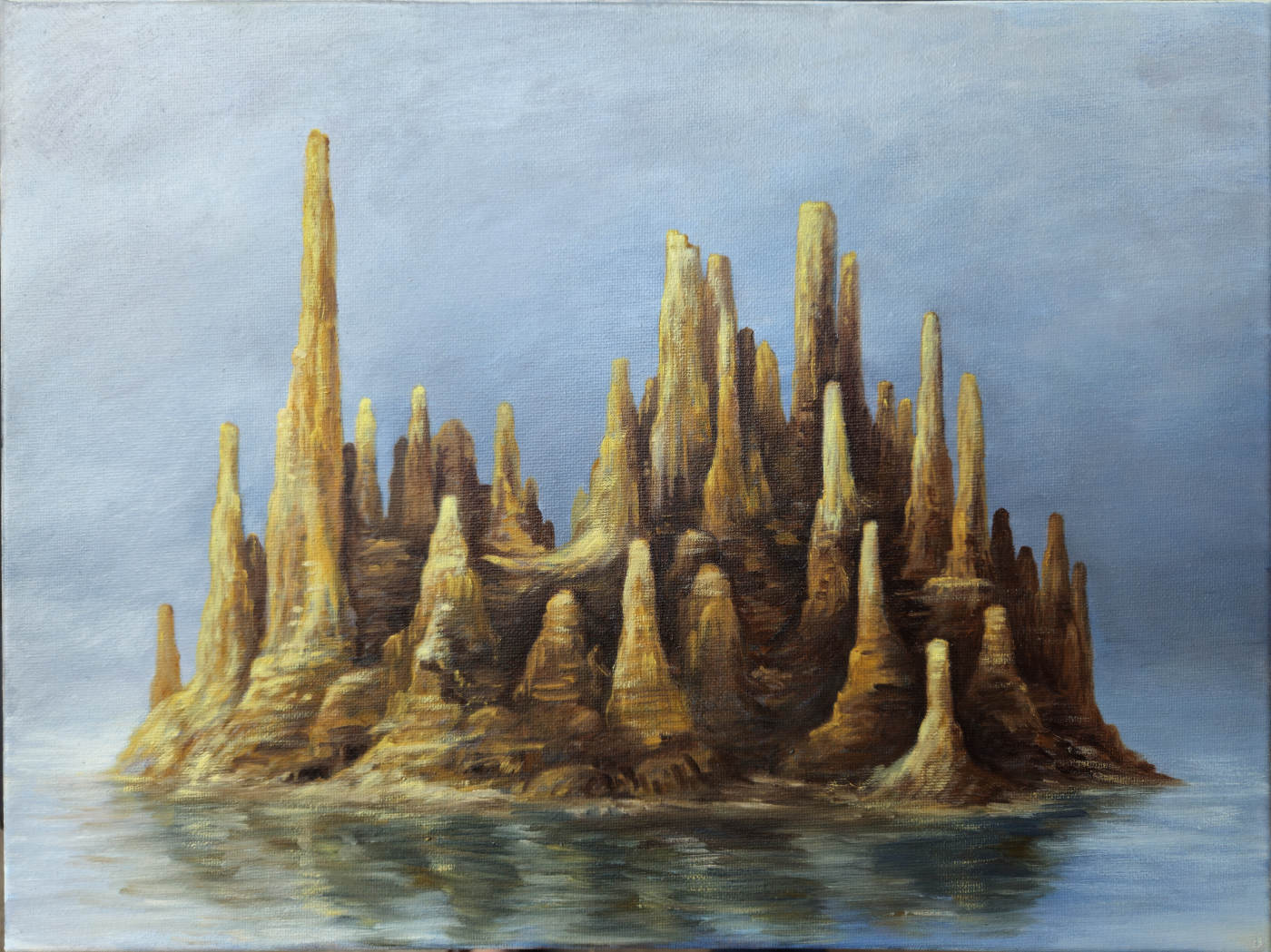
The Data Becoming Form begins with verified data from specific mined Bitcoin blocks. Each block provides a public and traceable source that exists independently of the studio. I translate selected transaction data into an elevation field through a defined mapping method, then develop that structure as landscape.
The block constrains the work, but it does not determine its visual form. Geometry, scale, viewpoint, atmosphere, weather, color, and material remain artistic decisions. The source can be checked independently, while the resulting landscape records how I interpret and direct it.
Developed through drawing, three-dimensional construction, AI-directed studies, and painting, the series examines what happens when a durable digital record is given spatial and material presence. The work is not an illustration of Bitcoin. It is a landscape formed through the relationship between verifiable constraint and human judgment.
Data Becoming Form: From Record to Landscape
Fixed sources, chosen forms, and where authorship enters
Each work in the Data Becoming Form Series begins with a specific mined Bitcoin block.
A mined block is a public digital record. It can be located, retrieved, and independently verified. It provides the artwork with a stable historical source that exists outside the studio.
I translate selected transaction data from that source into an elevation field. Transaction order determines placement, and transaction virtual size determines height through a consistent mapping method. The resulting structure preserves a measurable relationship to the original block.
The source constrains the work, but it does not complete it. The block does not choose the geometry, viewpoint, scale, atmosphere, weather, color, or material. Those decisions remain artistic.
The same elevation field can support columns, terraces, dunes, continuous surfaces, or other constructed forms. The underlying data remains fixed while the landscape changes.
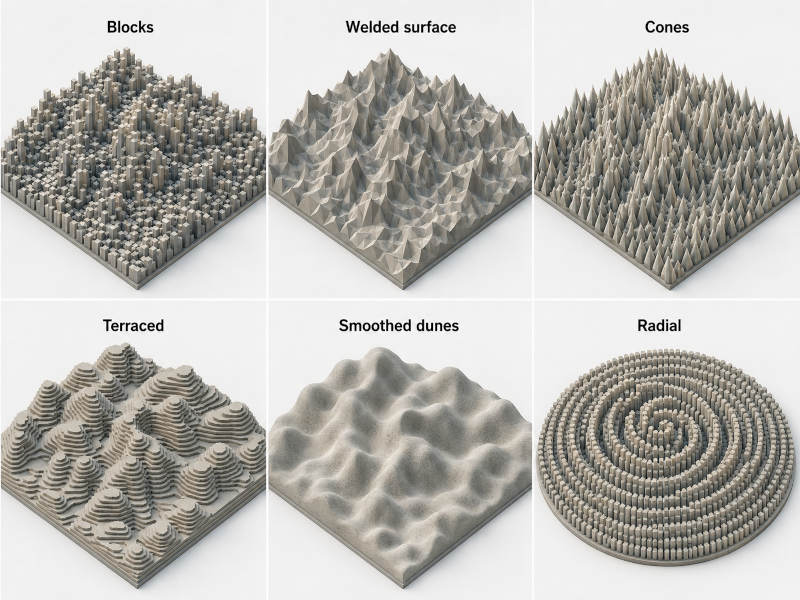
Making an Abstract Record Physical
Bitcoin is usually encountered through screens, prices, transactions, charts, and technical language. It has no single visible location and no natural visual appearance.
The Data Becoming Form gives part of that system spatial presence.
By translating block data into terrain, I can examine the record through scale, distance, light, weather, erosion, and material. Information that normally exists as code begins to function as a constructed place.
The purpose is not to illustrate what Bitcoin looks like. The work asks a different question:
What happens when a permanent digital record is treated as landscape?
Landscape makes the record perceptible, but the transformation is not neutral. Every visual form remains an interpretation.
Block 840000
Block 840000 provides one example of this process. It marked the fourth Bitcoin halving in April 2024, when the mining reward was reduced according to the protocol.
The block contains 3,050 transactions. Each transaction becomes one cell in a square field. The cells follow the transaction order recorded in the block and are placed in serpentine rows. Each occupied cell receives a height derived from its transaction virtual size. The eighty-six unused cells remain at zero.
Applying this method produces a field fifty-six cells across.
The block supplies the transaction order and values. The translation method determines how those values become an elevation field. I decide what geometry carries those elevations and how the resulting structure is experienced.
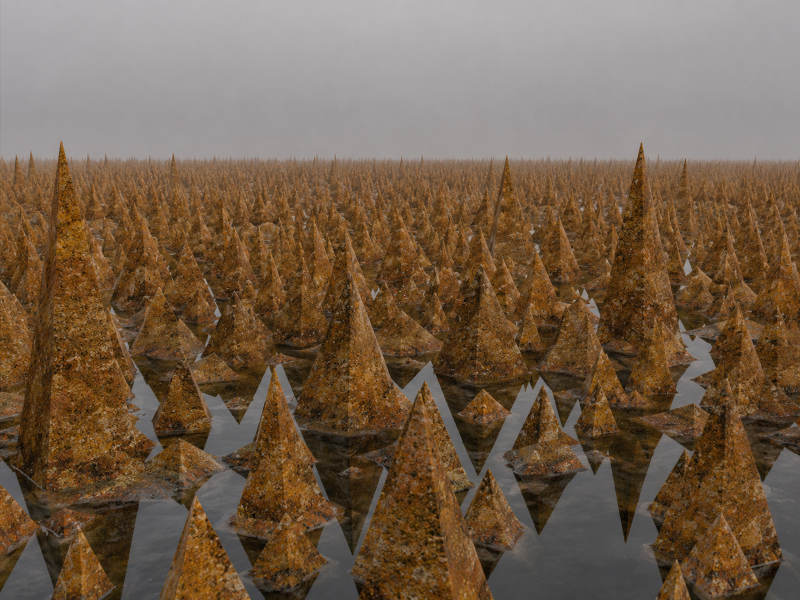
The terrain was first constructed with pointed forms. Although the elevation field remained accurate, the result resembled a natural mountain range. That reading contradicted the constructed character I wanted the work to retain.

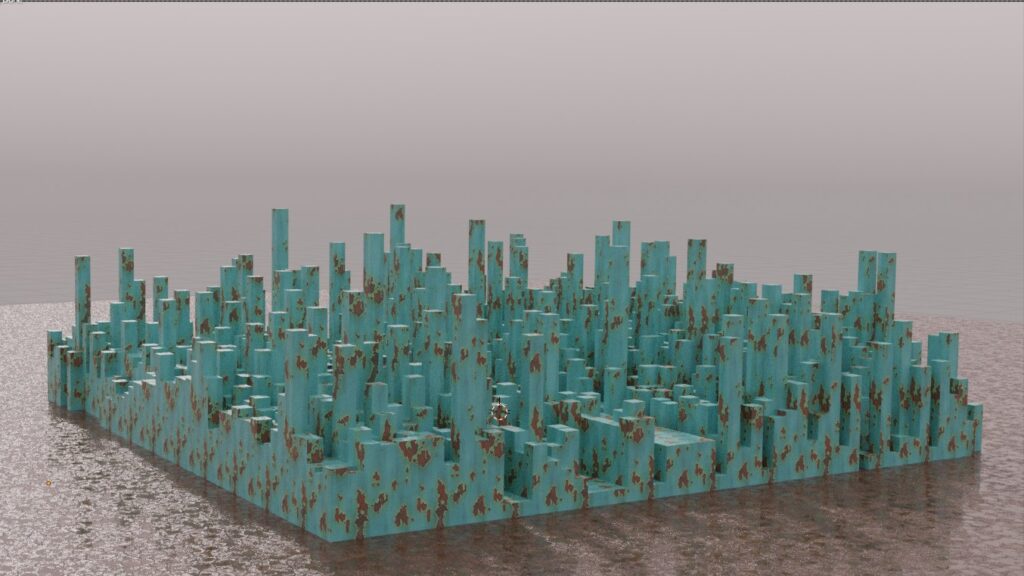
I returned to the same elevation field and rebuilt it using stepped vertical forms. The underlying data did not change. The visual language did. The terrain shifted from geological formation toward organized settlement.
This refusal and revision show where artistic judgment enters. The data establishes a constraint, but it cannot determine what kind of world the structure becomes.
From Structure to Atmosphere
Once the terrain is constructed, it can be developed through changing conditions of light, distance, weather, water, erosion, vegetation, and time.
These conditions do not alter the source block or the underlying elevation field. They alter how the structure is encountered.
A terrain can appear monumental when isolated against an open horizon. The same structure can appear vulnerable when surrounded by water or partially obscured by atmosphere. A lower viewpoint can transform an object into a distant place. Weathering can make a newly constructed form appear to carry a longer history.
Drawing, three-dimensional construction, AI-directed studies, and painting contribute different forms of information. They are not decorative layers placed over the data. They determine how a fixed structure enters human perception.
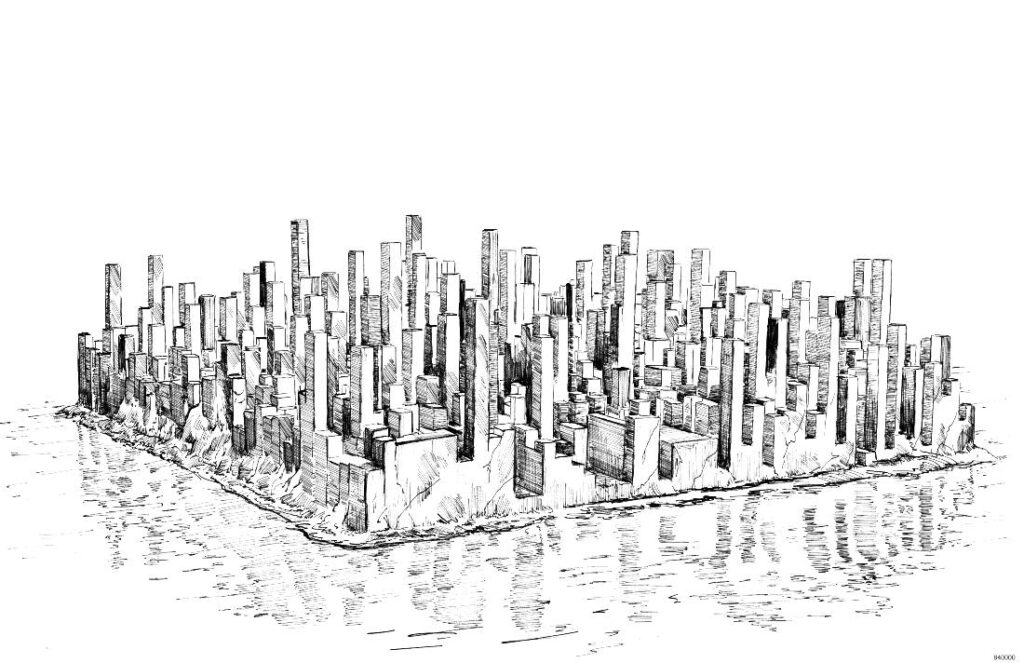
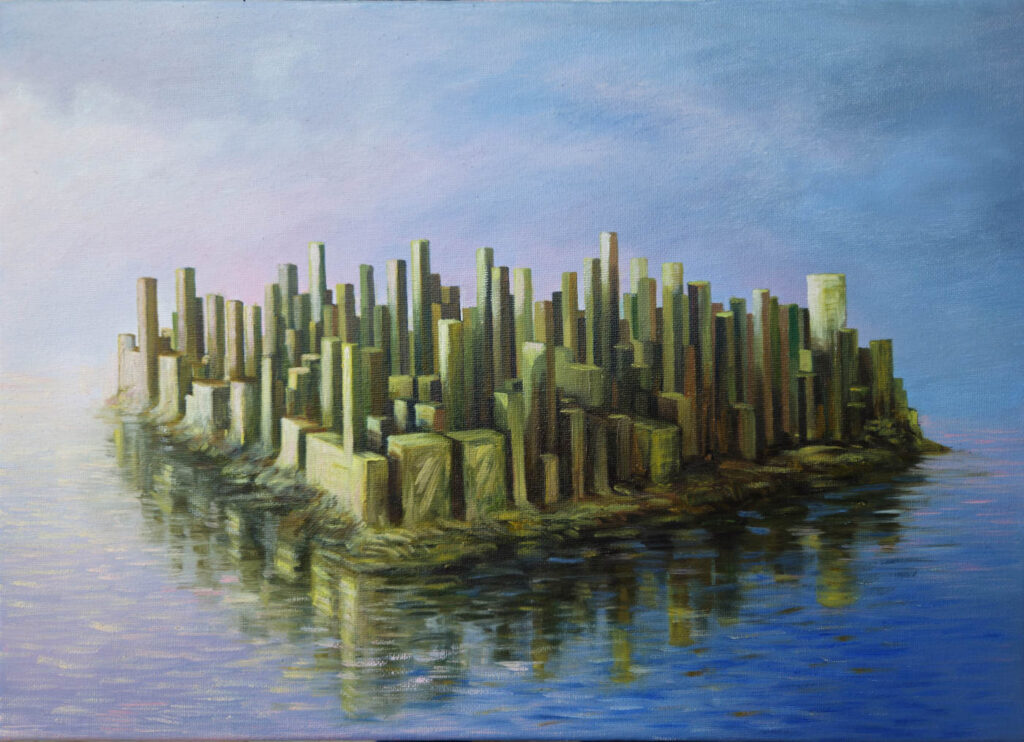
The painting does not verify the existence of the block. The blockchain already provides that record. Painting gives the translated structure weight, distance, weather, surface, and material presence.
What Remains Fixed
The relationship between the block and the artwork depends on a distinction among source, translation, and interpretation.
The source is public and verifiable.
The translation method establishes how selected transaction data becomes an elevation field.
The artistic interpretation determines how that field becomes a landscape.
The block constrains the work because its transaction order and values determine the underlying pattern. I do not freely invent that pattern after selecting the source. However, the block cannot decide what geometry carries it, which version should be refused, how the structure should be placed in space, or what material form the work should take.
A fixed source does not remove authorship. It gives authorship something specific to act upon.
Why the Record Matters
The Data Becoming Form could have begun with invented terrain. Using a verified block changes the work because the structure has a history outside the studio.
Each block records a specific event within the Bitcoin network. It existed before the artwork and continues to exist independently of it. The resulting landscape therefore remains connected to an identifiable source rather than to a general idea of technology.
But the record cannot explain the artwork.
It cannot explain why pointed geometry was rejected, why the structure was rebuilt as stepped forms, why a viewpoint was lowered, why one atmospheric condition was selected over another, or why a particular work became a painting.
The block provides the record. The artwork provides the interpretation.
The Data Becoming Form examines the distance between them. It begins with a stable digital source and asks how that source can acquire terrain, atmosphere, scale, and material presence without losing its connection to the record.
One Source Across Four Forms


