Stage 4: Final Painting — The Anchor of Material Scarcity
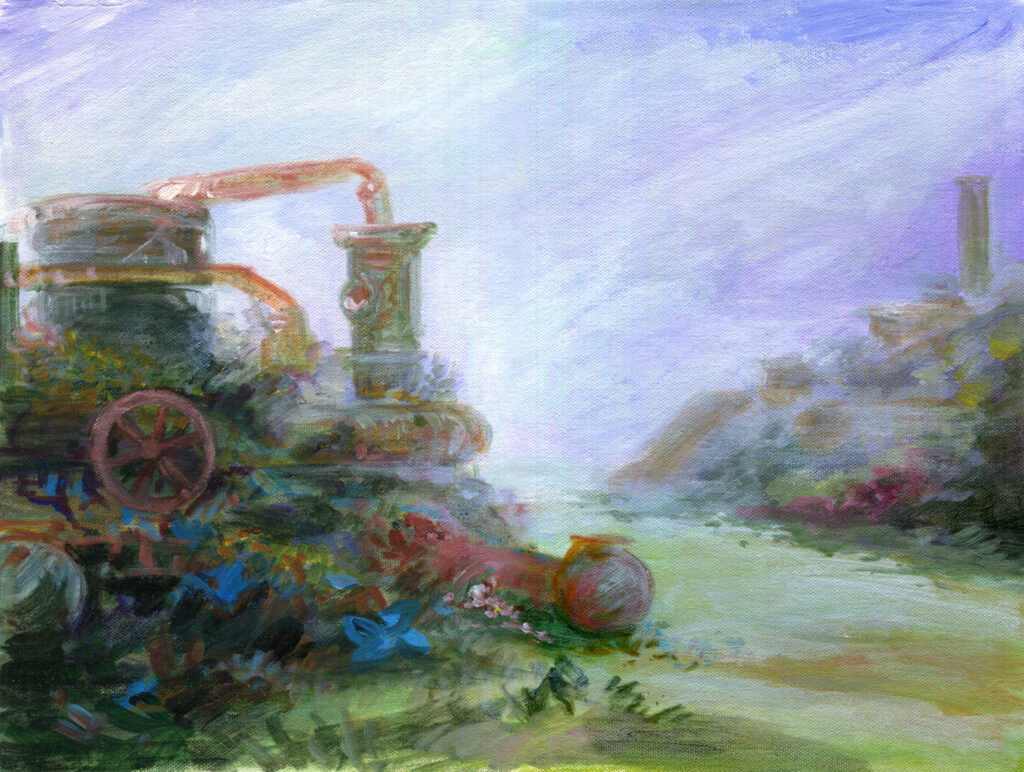
Painting is the final phase of my landscape practice, but it is not the stage where the work begins. It is where everything settles. By the time I reach the surface, the landscape has already been drawn, tested, expanded into structure, and observed through motion. The painting is not an invention; it is a culmination. It is the moment when all of the earlier clarity becomes physical. Painting allows the landscape to take on weight, temperature, and presence in a way no digital study can achieve. It is where the environment becomes real in a tactile sense — where the land is no longer a model or study, but a world carried through touch.
When I begin a painting, I am not searching for an image. I already know the structure of the landscape, the direction of the light, the behavior of the air, and the slow transitions that define the scene. The drawing has given me the logic; the 3D model has given me the weight; the motion studies have given me the duration and atmosphere. Painting integrates all of these understandings into a single surface. It is the stage where the landscape becomes whole.
Painting slows the process down again. After the acceleration of testing structures and observing motion, the brush returns me to the same kind of attention I had in the drawing phase — but with a different kind of responsibility. The marks carry texture, pressure, and material consequence. They cannot be undone with a command or adjusted with a slider. The act of painting turns understanding into decision. Every stroke is a choice about what the landscape actually feels like: the density of air, the softness of distance, the weight of a pipe resting in soil, or the way sediment gathers at the edge of water.
In paint, atmosphere becomes tactile. The transitions I studied in motion — the slow drift of haze, the way light scatters, the shift in temperature across space — now must be translated through color, value, and edge. The medium forces me to commit. It asks: What did the environment truly feel like? What did the air carry? How did the light behave across the terrain? Painting becomes a form of honesty. It requires me to bring forward only the details that matter and to let the rest fall away. The digital phases refine my understanding, but the surface is where the landscape ultimately finds its clarity.
I do not approach painting as a place for embellishment. I do not amplify drama or add symbolism. The landscapes have already revealed themselves in their earlier phases. Painting becomes the practice of respecting that revelation. When I paint a pipe, I paint it as it behaved in structure, in light, and in motion. When I paint sediment or vegetation, I paint them with the same quietness I observed in the drawing. The surface is not where I invent narrative; it is where I follow through on what the land already showed me.
What painting adds — and what no other phase can provide — is material presence. The texture of the brush, the layering of pigment, the subtle shifts in tone all give the landscape its physical reality. The digital phases allowed me to understand the world; painting allows the viewer to feel it. The work becomes an object, a place, a moment held in material form. The surface carries the weight of all the earlier study, but it also stands on its own as a complete environment. This is the moment where the landscape becomes something you can inhabit through sight alone.
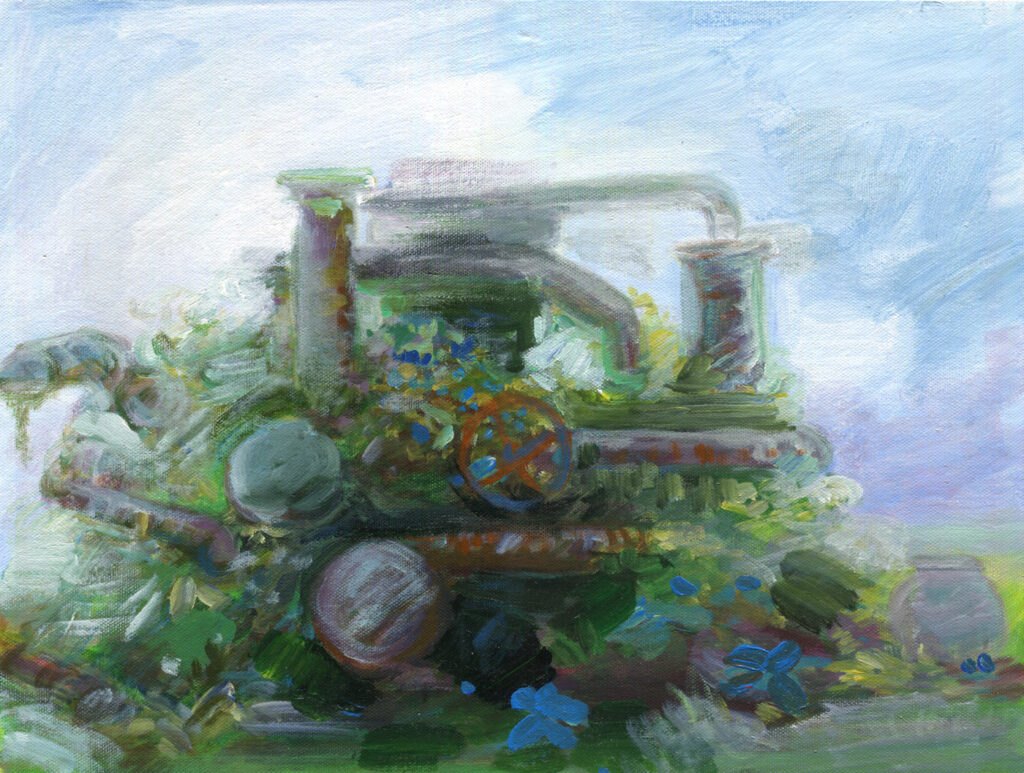
This is also where the Post-Globalist tone of my practice becomes quiet and grounded. Painting is the one phase that cannot be accelerated. It cannot rely on automation or replication. It is entirely dependent on attention, patience, and a physical relationship to the work. This slowness is not sentimental — it is structural. It reflects the same persistence found in the landscapes themselves. The world changes gradually; paint follows that same pace. The materiality of the medium resists the speed of contemporary culture, offering a counterbalance to the acceleration that shaped the earlier phases of the process.
By the time the painting is complete, the landscape has passed through every stage of understanding: structure, weight, movement, atmosphere, and material presence. The final work carries all of these layers without needing to reference the tools that shaped it. Viewers may never know which parts began as drawings, which were tested in 3D, or which motions were studied using AI.
Painting is the definitive final step of the Direction Provenance Model. It is the ultimate reassertion of human scarcity and material consequence. The finished canvas serves as the legally defensible evidence of the entire directional process, anchoring the work’s value in irreversible human labor, attention, and physical form. It reclaims the calm that began in drawing, settling the entire process into a single, coherent, and scarce image.
KB