Stage 2: 3D Modeling — Verification and Structural Scarcity
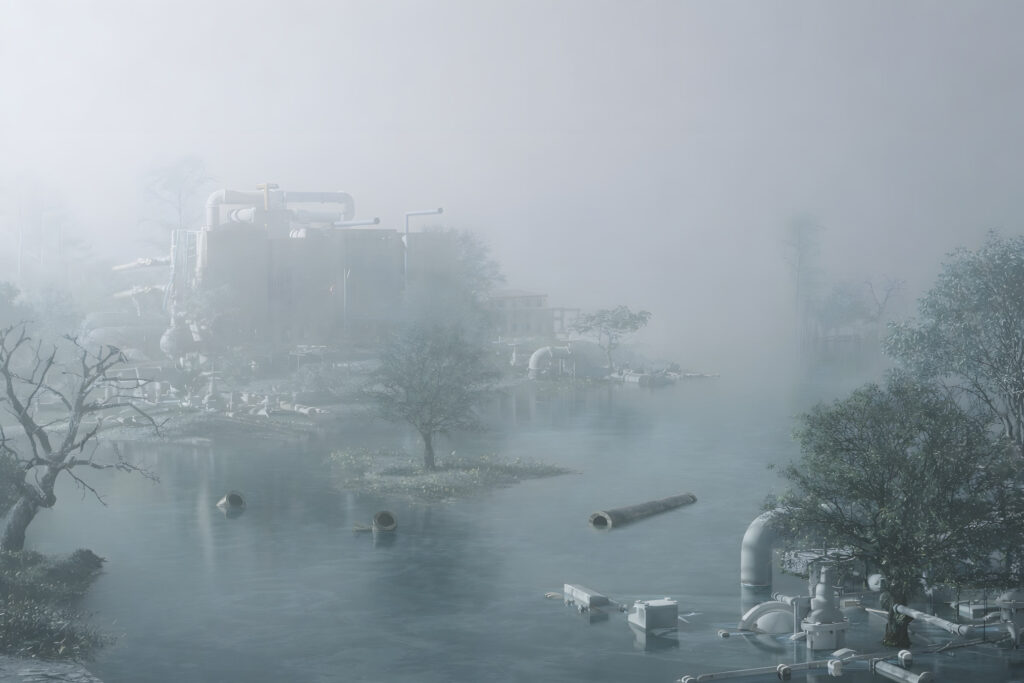
Drawing gives me the structure of a landscape, but it offers that structure in its quietest form—line, pressure, and the weight of observation. Once this foundation is set, the next phase of my process is to bring that structure into space. This is where Blender enters the practice, not as a stylistic departure but as an extension of the same discipline that begins with drawing. I’m not creating digital landscapes; I’m expanding the drawing into a fuller understanding of form.
When I take a drawing into Blender, the goal is not reinvention but verification. A landscape that functions in line must also function in volume. The slopes I draw must have believable angles. The pipes must sit under gravity. Surfaces must meet with natural transitions. Blender forces these relationships to hold themselves up. What appears stable in a drawing can reveal imbalances once it becomes a volumetric structure. This honesty is what I rely on. The tool tests the internal logic of the landscape before I move toward any final surface.
I do not use Blender for effects or digital identity. I use it to understand weight. Every form becomes a physical presence—something that must belong to the ground it sits on. A contour drawn in a single stroke now becomes a three-dimensional plane. A pipe that appeared stable must settle into soil. Light in Blender behaves according to the laws of space, not the intentions of style. This shift is crucial because it ensures that every decision in the final painting has already passed a structural test.
Walking through the landscape in 3D changes how I see it. It allows me to adjust height, tilt the ground, reposition objects, and observe how shadows fall from different angles. These movements are not about creating cinematic effects or digital spectacle. They are another method of studying the environment—using the same quiet observation that defines my drawings. Blender becomes a space for refinement, not invention.
What I value most in this phase is the clarity it brings. The drawing gives me the logic; Blender gives me the weight. The landscape becomes something I can move around, tilt, test, and adjust, without losing the stillness that defines the work. The landscapes I build are not scenes or compositions—they are terrains, slow, transitional environments shaped by real conditions. The software allows me to see how these conditions behave in space before I commit to painting.
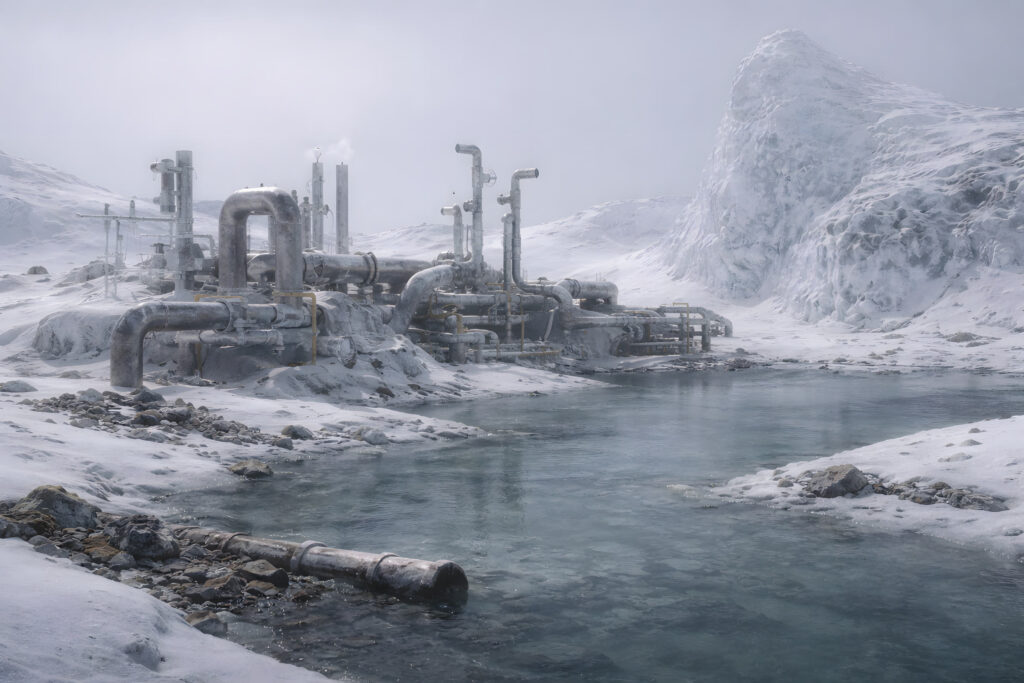
This phase also aligns with the Post-Globalist perspective that runs through my practice, though never as a statement. I’m not using 3D tools to escape into digital worlds. I’m using them to study the world as it is: land shaped by earlier systems, slowly adjusting to new phases. Blender lets me examine how these forms interact when placed under consistent light, gravity, and structure. The technology is not the identity; it is the space where the landscape becomes more complete.
By the time I leave Blender and move toward the motion phase, I have a landscape that holds together from every angle. I understand how it sits, how it balances, and how it carries its own weight. The next phase—motion—will test time and atmosphere. But none of that works unless the structural phase is solid.
Blender, in this sense, is the bridge between the direct observation of drawing and the temporal study that follows. It strengthens the landscape before color, movement, or surface treatment are introduced. It ensures that what I paint later is grounded in form, not interpretation. It is a critical step in the Direction Provenance Model, bringing the drawing into space without changing its voice and allowing the landscape to stand on its own with clarity and structure.
KB