Why Landscape
Landscape allows me to work across time, distance, and scale. It can hold construction, weather, growth, erosion, memory, and technological change within a single visual field. I draw from the American landscape tradition while shifting its focus from untouched nature to altered terrain, where infrastructure and natural processes occupy the same space. I develop these concerns through distinct bodies of work, including the Block Series, Systems Becoming Landscape, Seascapes, and related landscape studies. Each series approaches technological change through a different condition. The Block Series transforms verified data from a public blockchain into terrain, while the Systems Becoming Landscape examine environments shaped by infrastructure, natural forces, and cultural transition. Landscape is therefore not a backdrop in my work. It is the structure through which technological change becomes visible over time.
Series
Data Becoming Form
2026-ongoing
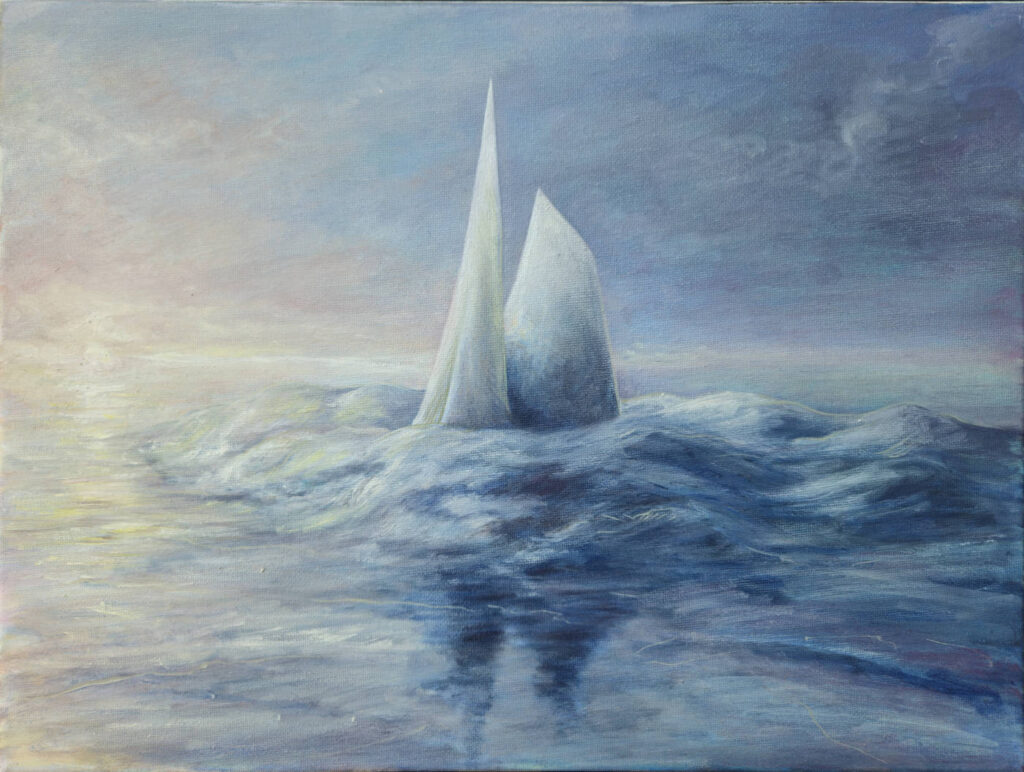
The Data Becoming Form begins with verified data from specific blocks on a public blockchain. I translate that fixed digital record into terrain, using landscape to examine how technological systems acquire form, atmosphere, scale, and material presence.
Systems Becoming Landscape
2025-onging
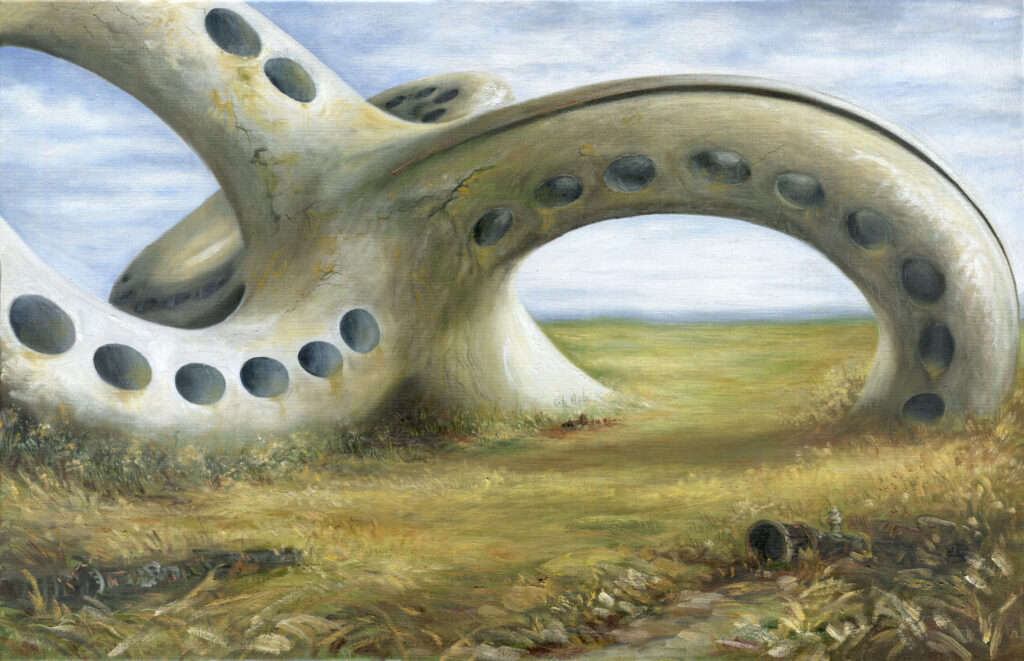
Systems Becoming Landscape examines how human-designed structures enter the longer life of the environments they occupy. Pipes, channels, utility networks, and ambiguous engineered forms are altered by water, vegetation, weather, and time. The works present nature and technology not as opposing forces, but as conditions that continually reshape one another. The series focuses on transformation without resolving it into progress, collapse, or dystopia.
Method
My practice moves across drawing, three-dimensional construction, AI-directed studies, and painting. The Direction Provenance Model identifies four forms of authored engagement within that process: Origin, Structure, Direction, and Anchor. It supports the work without determining its subject or meaning.
Read the Direction Provenance Model →